
If you’ve chosen content creation as your path in life, chances are it gives you more than a way to spend your time. It fills you with ideas, inspires you to grow, and pushes you to keep getting better at what you do. Through your work, you get to express yourself, share something meaningful with others, and put a little more of what you believe in into the world.
But inspiration alone cannot cover the cost of equipment or the hours you spend planning, filming, and editing. If you want to keep creating, you may also need a way to earn from it. OnlyFans lets you offer paid access to your work and connect more closely with the people who value it. In this guide, we’ll explore how to turn your content into an offer people understand, set prices that make sense for your time, and build a page you can sustain.
What OnlyFans Offers Content Creators
OnlyFans gives you several ways to earn from the audience you build. You can charge a monthly subscription for access to your page, sell individual posts or messages, accept tips, and offer paid custom content or interactions. You decide which options fit your work and what each purchase includes.
That flexibility lets you decide what people can see in your feed and what they pay to unlock. A fitness instructor could share short exercise clips for free and sell complete workout programs as paid posts. A painter might publish photos of finished paintings, then charge for videos showing the process from the first sketch to the final brushstroke. A cooking instructor could post simple recipe videos and offer detailed masterclasses for viewers who want to understand the finer points of each technique and develop more professional skills.
You can also keep your simpler content on YouTube or social media and dedicate your OnlyFans page entirely to in-depth lessons. With a paid monthly subscription, members could access every masterclass in your subscriber feed without unlocking each one separately. Or you could include some lessons in the subscription and sell more extensive programs as paid posts. The choice is yours – just make it clear what the subscription includes and what costs extra.
Decide What Your Audience Would Pay For
Start with the questions people already ask you. Do they want to see how you make something, learn a technique you only touched on in a short video, or spend more time with you? Comments, direct messages, and requests for follow-up content can help you spot what viewers value enough to explore further.
Then consider what you can offer consistently. A longer version of a free post may be worth paying for if it provides something useful: a complete explanation, practical feedback, an ongoing series, or access to work your audience cannot find elsewhere. If the paid version simply repeats what viewers have already seen, they have little reason to purchase it.
You do not have to guess what will sell forever. Choose one clear offer, explain what it includes, and pay attention to the questions and purchases it generates. Use what you learn to shape the next one.
Build a Content Offer You Can Sustain
Once you know what your audience wants, turn it into a specific promise. “Exclusive content” leaves too much to the imagination. “Two complete painting tutorials each month, with close-up footage of the techniques” tells a potential subscriber what they will receive. The same principle applies to adult content: describe the type of posts and how often you plan to publish them without implying that every video or personal request is included.
Before putting that promise in your bio, work out what it takes to deliver. A monthly series may require planning, filming, editing, and answering questions afterward. If one installment takes far longer than expected, can you still make the next one on time? Start with a schedule you could maintain during a busy month, then add more once you know how the work fits into your life.
Keep individual purchases just as clear. Tell buyers what a paid post contains, and explain the scope, price, and delivery time of any custom request before accepting it. Clear expectations make it easier for people to buy and for you to deliver what you promised.
Choose Between a Free and a Paid Page
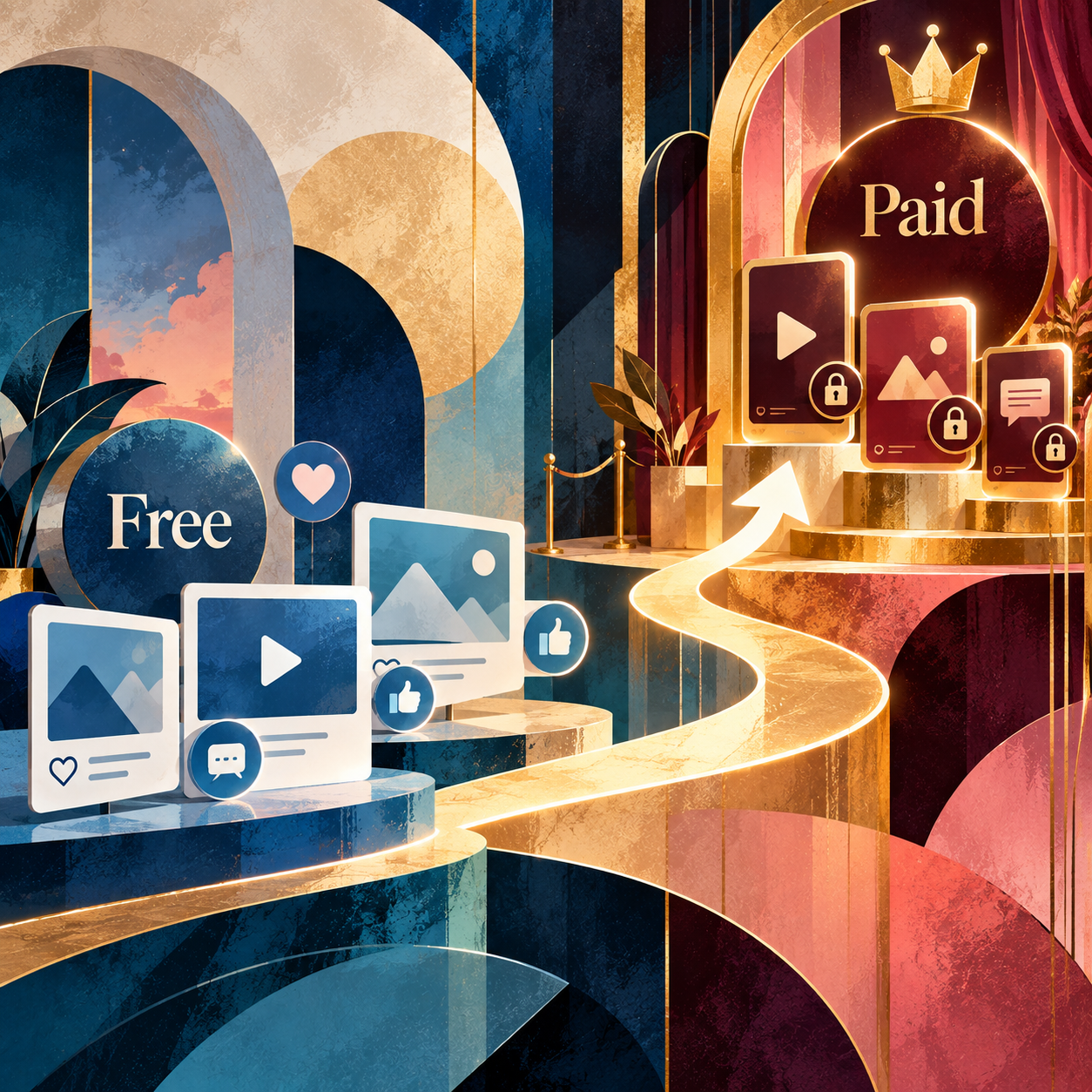
A free page lets people follow you without paying a monthly fee. You can use the feed to introduce your work, share previews, and offer individual posts or messages for purchase. This can work when your audience is curious but may need time to decide what to buy. The trade-off is that a growing follower count does not necessarily mean growing income. You still need to create offers people want to unlock.
A paid page charges for access to your subscriber feed. It works well when you can deliver something valuable on a regular basis, such as a continuing course, a series of videos, or new content several times a month. Some creators also sell additional material through paid messages. If you do, explain the difference clearly: what does the monthly fee cover, and what would a subscriber have to purchase separately?
Think about the experience you want someone to have on arrival. A person paying to join your page should find enough content to enjoy right away and a clear idea of what is coming next. A person following a free page should be able to understand your paid offers without sorting through vague teasers. You can experiment with either model, but make your promises match what subscribers actually receive.
Set Prices Around Your Actual Work
Before choosing a price, calculate what each offer costs you to make. A video that takes 20 minutes to watch may take hours to plan, film, edit, and upload. Custom requests can take even longer once you include the messages needed to agree on the details. Your price should reflect that time, along with any equipment, materials, or help you pay for.
Remember to calculate what you keep after OnlyFans takes its share. Under its published terms, creators receive 80% of fan payments before applicable taxes. A $10 sale would therefore leave $8 before your other expenses.
You can start with a price that feels reasonable for the work involved, then review it as you learn what people buy and how long each offer takes to deliver. If a custom project consumes an entire weekend, a few sales may still leave you earning less than you expected.
Plan Content Without Posting Every Day
A full calendar can look impressive until you have to keep up with it. If you also create for YouTube, Instagram, or clients, promising a new OnlyFans video every day may quickly turn the part of your work you enjoy into a deadline you dread.
Instead, plan around the time you actually have. You might film several short lessons in one session, photograph different stages of a project as you work, or divide a longer video into a series that subscribers can follow over several weeks. Keep a small reserve of finished material for weeks when filming is difficult. This helps you publish consistently without having to create everything at the last minute.
Tell subscribers what they can expect, then leave yourself room to make something especially ambitious when an idea deserves it. A dependable monthly masterclass can be more valuable than frequent rushed posts, particularly if your audience subscribes to learn from your skill. Quality and a schedule you can maintain give people a reason to trust what you promise.
Bring People to Your Page
Your OnlyFans page needs an audience from elsewhere. OnlyFans does not offer a sitewide keyword search where people can browse for creators by topic. In practice, someone usually reaches your page through a direct link or because they already know your username.
Use the channels where people already follow your work, and give them a specific reason to visit. A short painting video could lead to a detailed step-by-step course. A recipe clip could introduce a deeper masterclass on the finer points of the cooking technique. A fitness instructor could explain how to perform a familiar exercise correctly, then invite viewers to join a complete workout program or book a personal video sessio. Show enough to spark interest, then explain what the paid version offers. A generic “subscribe to my OnlyFans” gives people much less reason to act.
Check each platform’s rules before promoting your page, especially if your work touches on sexual topics (for example, if you run a sex toy store or create content as a sex coach). A link or promotional post allowed on one platform may be restricted on another, even when the material itself is educational or the products are legal. Share content that fits the channel’s rules and give interested viewers a clear path to the relevant offer.
Give Subscribers a Reason to Stay
Getting someone to subscribe is only the beginning. When they arrive, make it easy to find what they came for. If you publish tutorials, organize them into recognizable series and use clear post titles. If your page offers several types of content, explain where to start and what new subscribers can expect over the coming month.
Pay attention to the questions people ask in your comments and messages. If the same question keeps coming up, it may be a sign that your audience wants a fuller explanation than you have given so far. Use those questions as ideas for future videos, lessons, or posts. You can even ask viewers which part they would like you to cover next, then use their answers to create something they already want to see.
Most of all, keep delivering the experience you advertised. Someone who joined for monthly masterclasses needs to see new masterclasses, while someone paying for a more personal connection may value thoughtful replies as much as the feed. Be clear about how and when you interact, so subscribers know what their payment includes and you can maintain healthy boundaries.
Protect Your Content, Boundaries, and Account
Before publishing, review OnlyFans’ current terms and content rules, especially if another person appears in your photos or videos. Make sure everyone involved is an adult, has agreed to the material being shared, and completes any verification or consent steps the platform requires. Permission to film someone is not automatically permission to sell the footage.
Think about privacy before you begin posting, too. Check whether your videos reveal your address, workplace, or other details you would rather keep private. Use a strong, unique password and two-factor authentication, and decide what personal information you are comfortable sharing with subscribers.
Set boundaries for paid interactions before requests arrive. State what you offer, what you decline, and how long delivery usually takes. If an agency or assistant helps run your page, agree on what they can post or say on your behalf. OnlyFans’ published creator terms state that the creator remains responsible for activity on their account even when an agency assists them.
Measure What Is Working and Adjust
A growing follower count can feel encouraging, but it does not tell you whether your page is earning enough to support the work behind it. Look at which promotional posts bring people to your page, which offers they purchase, and whether paid subscribers stay for another month. Track how much time and money you spend creating each type of content, too.
For example, a short video may sell fewer copies than an elaborate custom project but take a fraction of the time to make. That difference matters when you decide what to create again. You might also find that subscribers consistently watch one series and rarely engage with another. Their behavior can help you choose where to put your energy.
Review your results regularly and change one part of your offer at a time. That way, you can tell whether a new format, price, or publishing schedule actually helped. The goal is to find a way of creating that your audience values and that makes financial sense for you.
Conclusion
OnlyFans gives you room to decide how people pay for your work, from individual lessons to a subscription that includes everything in your feed. Start with an offer you can explain clearly and deliver consistently. Then listen to your audience, check what they actually buy, and adjust as you learn.
Your page does not need every possible feature or a demanding publishing schedule. It needs to give people something they value while making the time you spend creating worthwhile for you, too.