
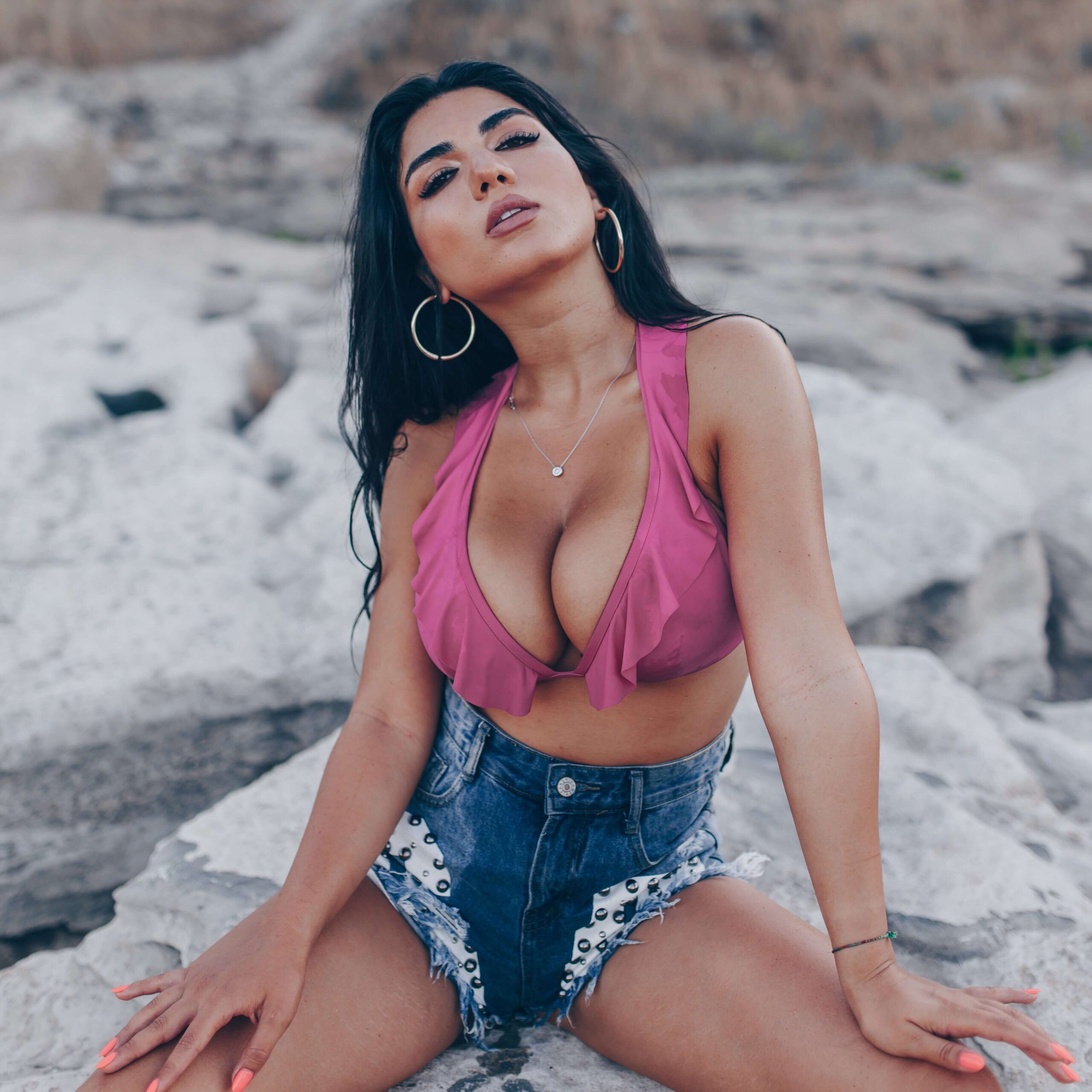
On OnlyFans, photos aren’t just content. They’re communication.
Every pose sends a signal – confidence, curiosity, intimacy, control, availability, distance. Fans don’t always notice these signals consciously, but they react to them. They decide whether to subscribe, stay, tip, or unlock based on how a photo feels, not just on what it shows.
That’s why posing matters more than expensive cameras or perfect locations. A creator who understands body positioning, angles, and intention can make simple, low-effort photos look deliberate and desirable. A creator who doesn’t often ends up with content that feels flat – even if everything is technically “right”.
This guide breaks posing down in a practical way.
From subtle, low-intensity poses that build anticipation, to more openly seductive ones that drive engagement and spending.
No modeling background required.
No professional studio needed.
Just a clear understanding of how posing actually works on OnlyFans – and how to use it intentionally.
Why Posing Affects Subscriptions, Retention, and Tips
On OnlyFans, fans don’t compare creators the way photographers do.
They don’t think in terms of composition, symmetry, or technical quality.
They react to signals.
A pose can quietly suggest confidence. Or hesitation.
Control. Or uncertainty.
Invitation. Or distance.
Those signals directly affect three things that matter most to creators:
- whether someone subscribes
- whether they stay
- whether they spend beyond the subscription
Here’s how that plays out in practice.
Posing and first-time subscriptions
When a potential subscriber opens a profile, they make a decision fast.
Usually in seconds.
They scroll.
They glance at pinned posts and previews.
They’re not looking for perfection – they’re looking for clarity.
Clear posing answers unspoken questions:
- Is this creator confident on camera?
- Does this content feel intentional?
- Is there a clear tone – soft, bold, dominant, playful?
Subtle posing often works best here. Not because it’s “safe”, but because it feels controlled. It shows that the creator understands how to hold attention without giving everything away immediately.
Creators who rely on random angles, stiff posture, or inconsistent body language often lose people at this stage – even if the content itself is explicit.
Posing and retention
Once someone subscribes, posing starts to matter in a different way.
At this point, fans aren’t deciding if they like you.
They’re deciding if they want to keep paying.
Repetitive posing is one of the most common reasons subscriptions quietly expire.
Same angles.
Same posture.
Same facial expression, just different outfits.
Even loyal fans notice when photos start to blur together.
Intentional posing helps avoid that. Small changes in body position, gaze direction, and tension can make similar setups feel new without requiring new locations or concepts.
This is where understanding the difference between subtle and seductive posing becomes useful – not to escalate content, but to vary it.
Posing and tips / PPV spending
Tips and PPV purchases are driven by emotional proximity.
Fans spend more when a photo or video feels:
- directed at them,
- deliberate,
- personal rather than generic.
Seductive posing plays a bigger role here. Not necessarily more nudity – but clearer intent.
Direct eye contact.
Forward body positioning.
Poses that feel chosen rather than accidental.
When a fan feels like a creator is present in the frame, not just visible, spending behavior changes. Tips become more frequent. PPV messages get opened faster.
This is why posing isn’t just aesthetic. It’s behavioral.
Creators who understand this don’t pose randomly.
They choose poses based on what they want the viewer to do next.
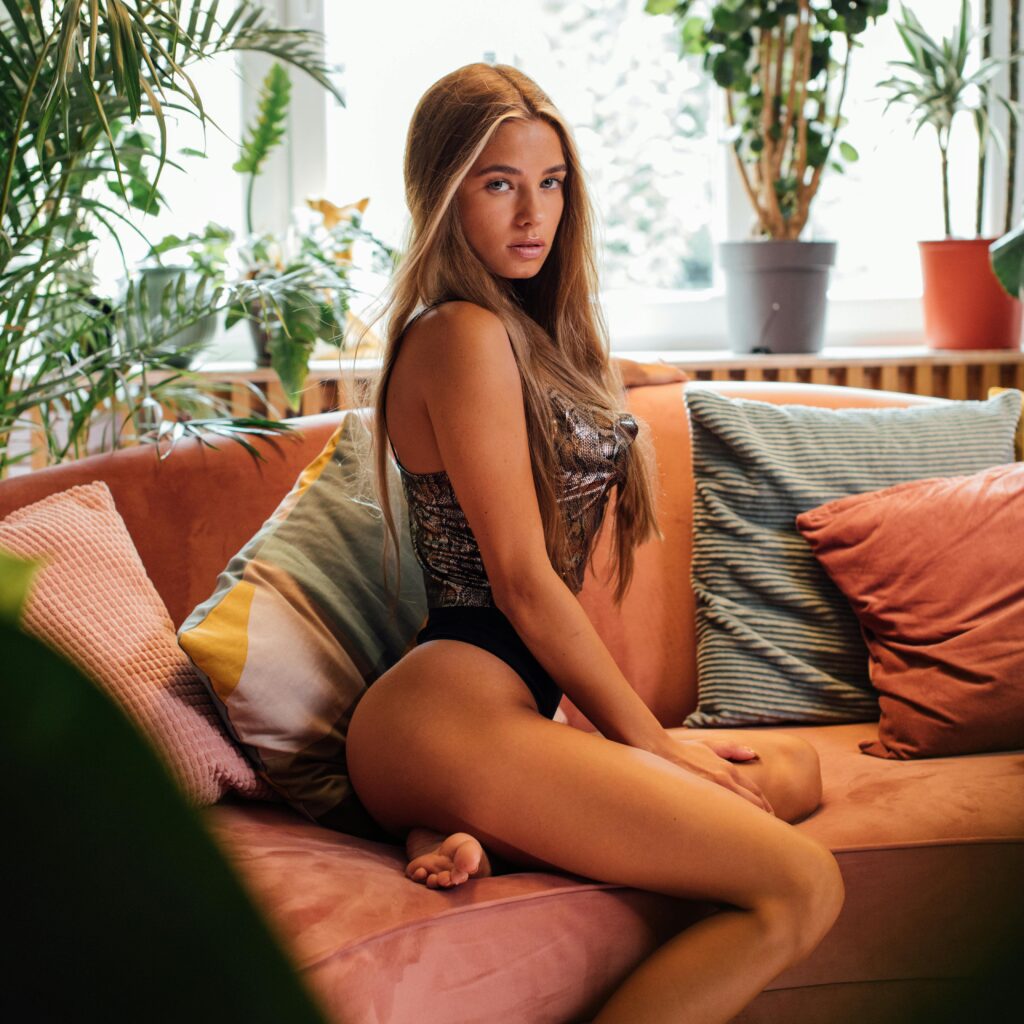
Subtle Posing – What It Communicates and When to Use It
Subtle posing is often misunderstood.
Many creators associate it with being “safe”, “basic”, or not sexual enough. In reality, subtle posing is one of the most effective tools on OnlyFans – especially when the goal is to build anticipation, not deliver everything at once.
Subtle poses don’t remove sexuality.
They delay it.
And that delay is what keeps people watching, scrolling, and staying subscribed.
What subtle posing actually communicates
Subtle posing sends controlled signals.
It tells the viewer that the creator is aware of the camera and choosing what to reveal – and what to hold back.
Common signals subtle poses communicate:
- calm confidence
- emotional distance with invitation
- self-control
- intentional teasing
This kind of body language feels deliberate. Nothing looks rushed. Nothing looks accidental.
For many fans, especially long-term subscribers, that sense of control is more appealing than constant intensity.
How fans read subtle poses (even if they don’t realize it)
Fans usually don’t think, “This is a subtle pose”.
They think, “This feels intimate”, or “This feels different”.
Subtle posing often creates:
- longer viewing time on photos
- more profile scrolling
- more curiosity about what comes next
That’s why subtle poses perform well in:
- profile previews
- pinned posts
- non-explicit feed content
- teaser images for PPV
They don’t overwhelm. They invite.
Common elements of subtle posing
Subtle posing isn’t about doing nothing. It’s about doing less on purpose.
Some common elements:
- relaxed shoulders instead of squared posture
- body turned slightly away from the camera
- eyes not always looking directly into the lens
- hands resting naturally instead of framing explicit areas
- partial coverage – fabric, hair, arms, angles
These poses often feel softer, slower, and more observational.
Nothing is exaggerated.
Nothing is pushed forward aggressively.
And that’s exactly why they work.
When subtle posing works best
Subtle posing is especially effective at specific moments in a creator’s content strategy.
It works well:
- when attracting new subscribers
- when rebuilding interest after a quiet period
- when transitioning between content themes
- when posting frequently and needing visual variety
It’s also useful on days when you don’t feel like performing at full intensity – subtle posing still looks intentional, even when energy is low.
This makes it a sustainable tool, not just an aesthetic one.
A common mistake creators make with subtle posing
The biggest mistake is confusing “subtle” with “passive”.
Passive posing looks unplanned:
- stiff posture
- blank expression
- no tension in the body
- awkward angles
Subtle posing still requires awareness.
There is still intention behind every position, even if it looks effortless.
If a photo feels flat, it’s usually not because it’s subtle – it’s because the pose wasn’t chosen with purpose.
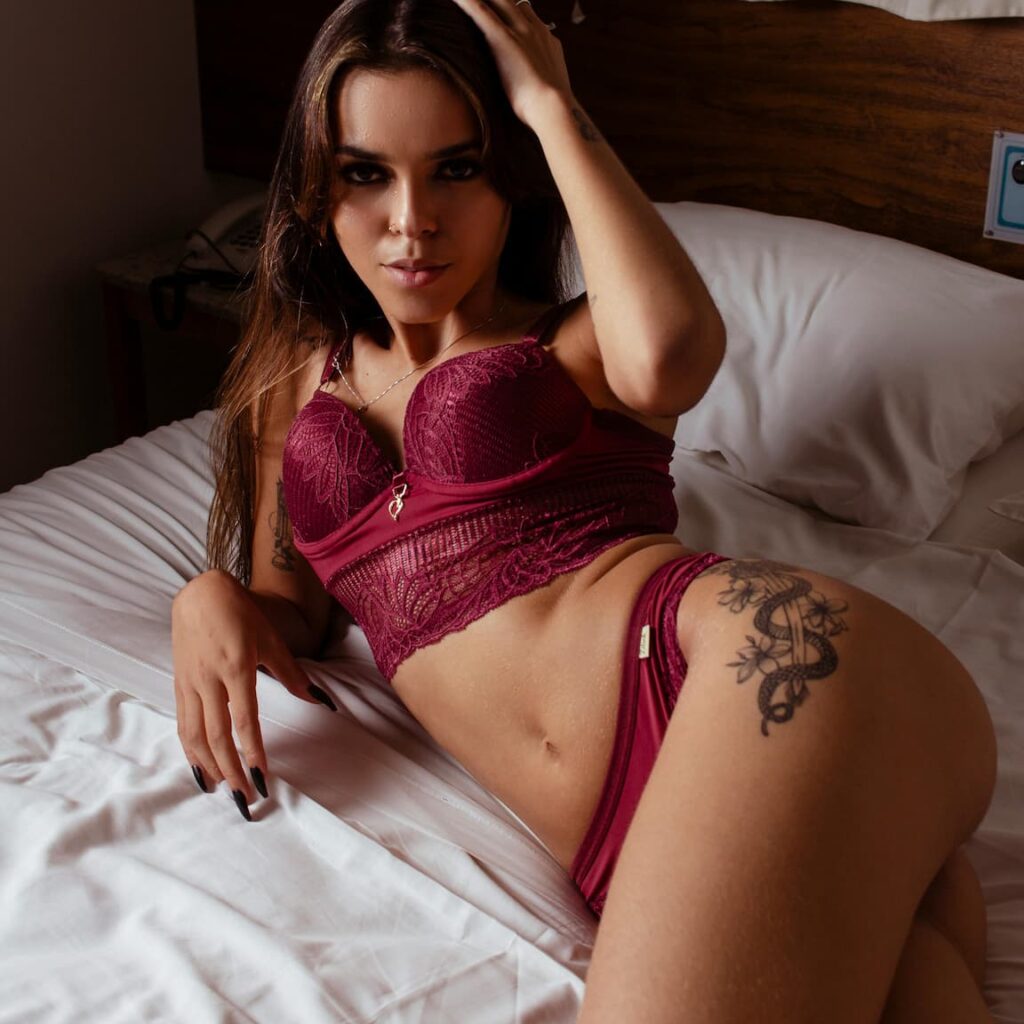
Transitioning From Subtle to Seductive – Where the Shift Actually Happens
The shift from subtle to seductive isn’t about removing more clothing.
It’s about changing intention.
Many creators assume the transition happens when content becomes more explicit. In reality, the shift happens earlier – in posture, eye contact, body tension, and direction toward the camera.
Seduction begins in positioning, not exposure.
What Actually Changes
The move from subtle to seductive usually involves three controlled adjustments:
- Direction of the body
- Level of eye engagement
- Amount of tension in the pose
Subtle posing often angles the body slightly away.
Seductive posing turns it toward the viewer.
Subtle posing may use soft or indirect eye contact.
Seductive posing locks eyes intentionally.
Subtle posing relaxes the body.
Seductive posing introduces controlled tension – in the spine, hips, shoulders, or legs.
None of these changes require explicit action. They require awareness.
Body Orientation: Away vs Toward
One of the clearest visual shifts is direction.
In subtle posing:
- the torso might turn sideways
- the hips may angle away
- the shoulders aren’t squared to the lens
In seductive posing:
- the body faces the camera more directly
- hips or chest are positioned forward
- posture becomes more deliberate
Facing the camera doesn’t mean standing stiff. It means acknowledging the viewer.
This acknowledgment changes how the image feels. It stops being observational and starts becoming interactive.
Eye Contact: Suggestion vs Intensity
Eye contact is often the strongest escalation tool.
Subtle posing might use:
- soft gaze
- eyes slightly lowered
- looking past the camera
Seductive posing uses:
- direct eye contact
- longer holds
- slightly narrowed eyes
- deliberate facial focus
When you look directly into the lens, the photo feels personal. It feels intentional. It feels directed at someone.
That shift alone can change how fans respond to a post.
Body Tension: Relaxed vs Controlled
Subtle poses tend to feel natural and loose.
Seductive poses introduce structure:
- arched back
- tightened core
- shifted hip
- deliberate leg placement
- lifted chin
That slight tension creates visual curves and defined lines. It adds shape.
But it has to stay controlled. Too much tension looks forced. Too little looks accidental.
The goal is deliberate positioning – not exaggeration.
The Mistake Creators Often Make
Many creators jump too far too fast.
They go from relaxed posture straight into exaggerated arching, dramatic angles, or over-the-top expressions.
The result feels disconnected.
The better approach is gradual escalation:
- slight hip shift
- then more direct gaze
- then increased body angle
- then stronger posture
Think of it like adjusting a dimmer switch – not flipping a light on full brightness.
That gradual progression keeps the content dynamic. It also allows you to reuse the same setup for multiple photos, moving from subtle to more intense within one shoot.
Why This Transition Matters for Engagement
This progression gives you content range.
You can:
- post subtle images to build curiosity
- follow with stronger, more direct poses
- use the most intense shots for PPV or premium tiers
When the escalation feels intentional, fans stay engaged longer. They feel like they’re moving through something – not just seeing random images.
That sense of progression increases retention and spending without requiring constant reinvention.
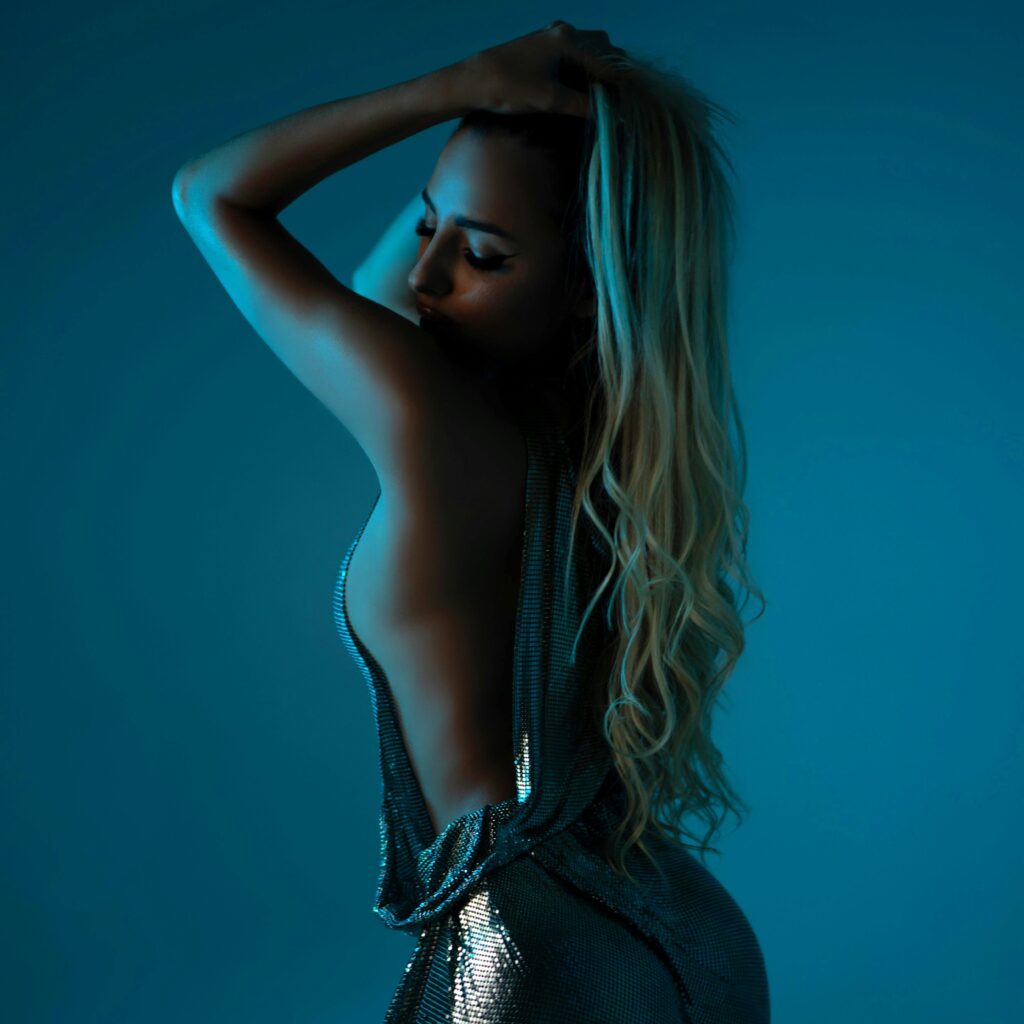
Seductive Posing – What Makes It Effective Without Looking Forced
Seductive posing isn’t about exaggeration.
It’s about clarity.
When a pose becomes seductive, the viewer should feel intention – not effort. The moment a pose looks strained, overacted, or uncomfortable, the illusion breaks. Instead of attraction, it creates distance.
The goal is controlled intensity.
Seductive Doesn’t Mean Extreme
A common mistake creators make is assuming seductive equals dramatic:
- extreme back arch
- exaggerated facial expression
- forced lip bite
- unnatural angles
That approach often reads as performance instead of presence.
Effective seductive posing is subtle in execution, even if the energy is stronger. It feels grounded. Stable. Controlled.
The body should look like it chose that position – not like it’s trying to prove something.
The Core Elements of Effective Seductive Posing
There are four main elements that make seductive posing work.
1. Stability
Seductive poses feel anchored.
Feet planted.
Hips intentionally shifted.
Spine aligned with purpose.
If you look unstable or mid-adjustment, the pose loses impact. Stability makes the image feel confident.
2. Controlled Curves
Instead of exaggerating every curve, choose one focal point.
It could be:
- a slight hip shift
- a defined waist line
- a subtle arch in the lower back
- a deliberate leg extension
Over-accentuating everything at once creates visual chaos. Seductive posing works best when one line leads the eye.
3. Direct Engagement
Seduction often requires acknowledgment.
That can be:
- direct eye contact
- chin slightly lowered while looking up
- shoulders angled forward
- body leaning toward the camera
This creates proximity. The viewer doesn’t feel like they’re watching – they feel addressed.
But engagement doesn’t have to mean intensity in every shot. You can alternate between direct gaze and controlled expression to keep it dynamic.
4. Measured Tension
Seductive posing introduces tension – but it’s intentional tension.
- tightened core
- lifted chest
- engaged legs
- slightly flexed hands
Too much tension makes you look stiff. Too little makes the pose collapse.
The sweet spot is visible control without visible strain.
Facial Expression: The Most Overused Tool
Many creators rely heavily on facial expression to “sell” seduction.
In reality, body positioning does most of the work.
Overacting with:
- exaggerated pout
- overly dramatic open-mouth expressions
- constant lip biting
can make content feel repetitive.
Instead, subtle facial shifts often work better:
- relaxed lips
- slow blink
- steady gaze
- slight smirk
The body creates structure. The face adds tone.
Why Forced Seduction Fails
When a pose feels forced, fans subconsciously pick up on it.
Signs of forced posing:
- visible muscle strain
- awkward hand placement
- unnatural back bend
- expression that doesn’t match body language
This disconnect creates friction. The image stops feeling immersive.
Seduction works best when it feels effortless – even though it’s deliberate.
The Real Difference Between Confident and Forced
Confidence looks like:
- balanced posture
- natural breathing
- clean lines
- steady gaze
Forced looks like:
- overcompensation
- overextension
- tension everywhere
- trying too hard to signal sexuality
Seductive posing is not about increasing intensity to the maximum.
It’s about increasing it just enough.
Core Seductive Pose Structures Creators Can Reuse (Standing, Seated, Lying Down)
You don’t need endless new ideas for seductive posing.
What you need are reliable structures you can adjust slightly to create variety. Most high-performing creators reuse the same core pose frameworks – they just shift angle, gaze, tension, or camera height.
Below are three foundational categories you can rotate during shoots.
Standing Poses – Control and Presence
Standing poses communicate authority and clarity. They feel deliberate and grounded.
They work especially well for:
- announcement posts
- promotional images
- high-confidence energy
- direct engagement content
Structure 1: The Weight Shift
This is one of the most reliable seductive frameworks.
How it works:
- Shift weight onto one leg.
- Let the opposite hip drop slightly.
- Keep shoulders relaxed but aligned.
- Slightly engage your core.
This creates a natural S-curve without exaggeration. It defines the waist and elongates the legs.
To intensify it:
- Turn your torso slightly toward the camera.
- Add direct eye contact.
- Slightly lift the chin.
To soften it:
- Turn your gaze away.
- Let one shoulder angle forward.
- Relax your arms.
Small adjustments change the tone completely.
Structure 2: Forward Lean
Leaning slightly toward the camera increases proximity.
How it works:
- Feet grounded.
- Upper body leans forward slightly.
- Shoulders come subtly toward the lens.
- Core engaged for stability.
This pose feels interactive. It creates a sense of closeness without requiring exaggerated movement.
To avoid looking forced:
- Keep the spine neutral.
- Don’t over-arch.
- Let the lean be subtle, not dramatic.
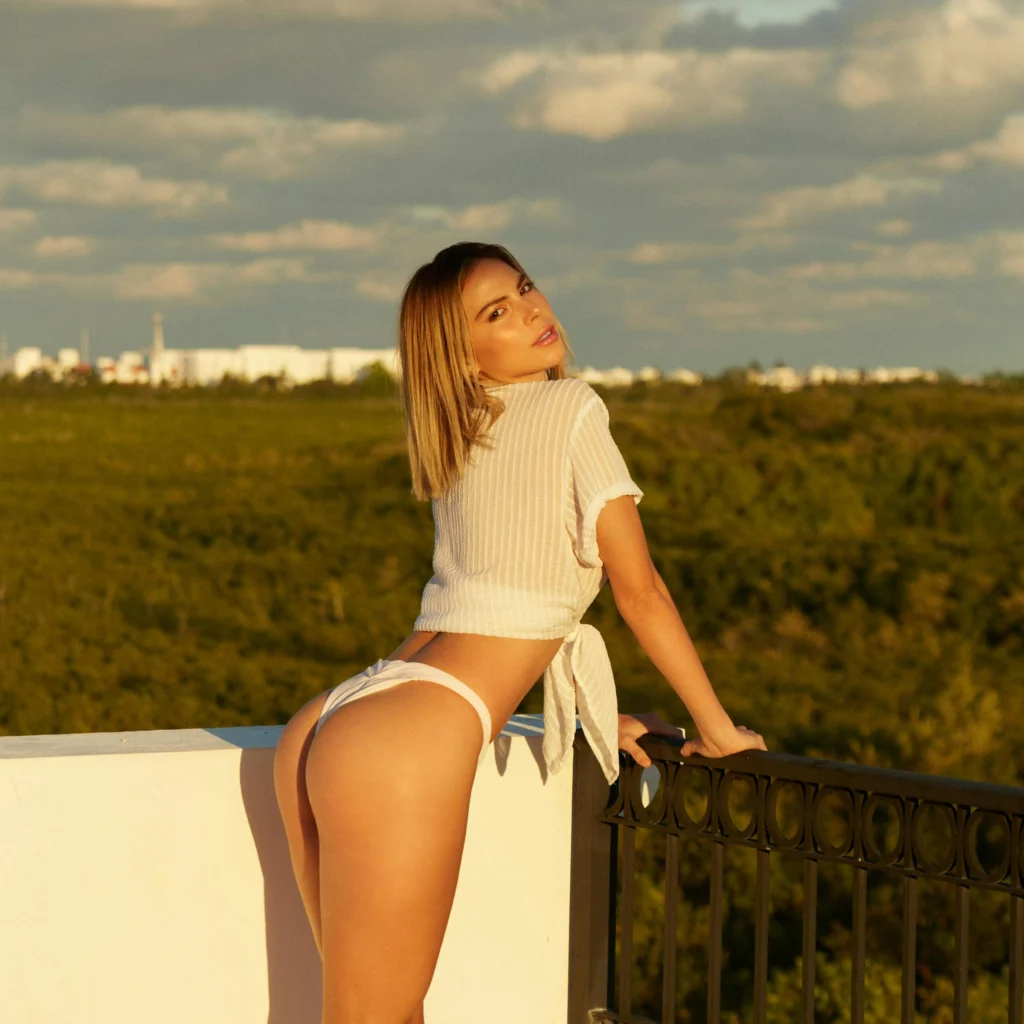
Structure 3: Over-the-Shoulder Turn
This is a transitional pose between subtle and seductive.
How it works:
- Body angled away.
- Head turned back toward the camera.
- One hip slightly emphasized.
It creates tension between distance and engagement. The viewer feels acknowledged but not fully given access.
Adjustments:
- Direct eye contact increases intensity.
- Soft gaze reduces it.
- Stronger hip shift increases curve definition.
Seated Poses – Controlled Intimacy
Seated poses feel closer and more personal. They remove height dominance and shift the tone toward invitation.
They’re useful for:
- subscription retention posts
- personalized content
- PPV previews
- casual but intentional shoots
Structure 1: Edge of Seat Position
Sit near the edge of a chair or bed.
How it works:
- Feet grounded.
- Knees slightly angled.
- Core lightly engaged.
- Back straight but not stiff.
This creates posture without tension.
To make it more seductive:
- Lean slightly forward.
- Rest hands naturally on thighs.
- Make steady eye contact.
To soften:
- Angle knees away.
- Let shoulders relax.
- Break direct gaze.
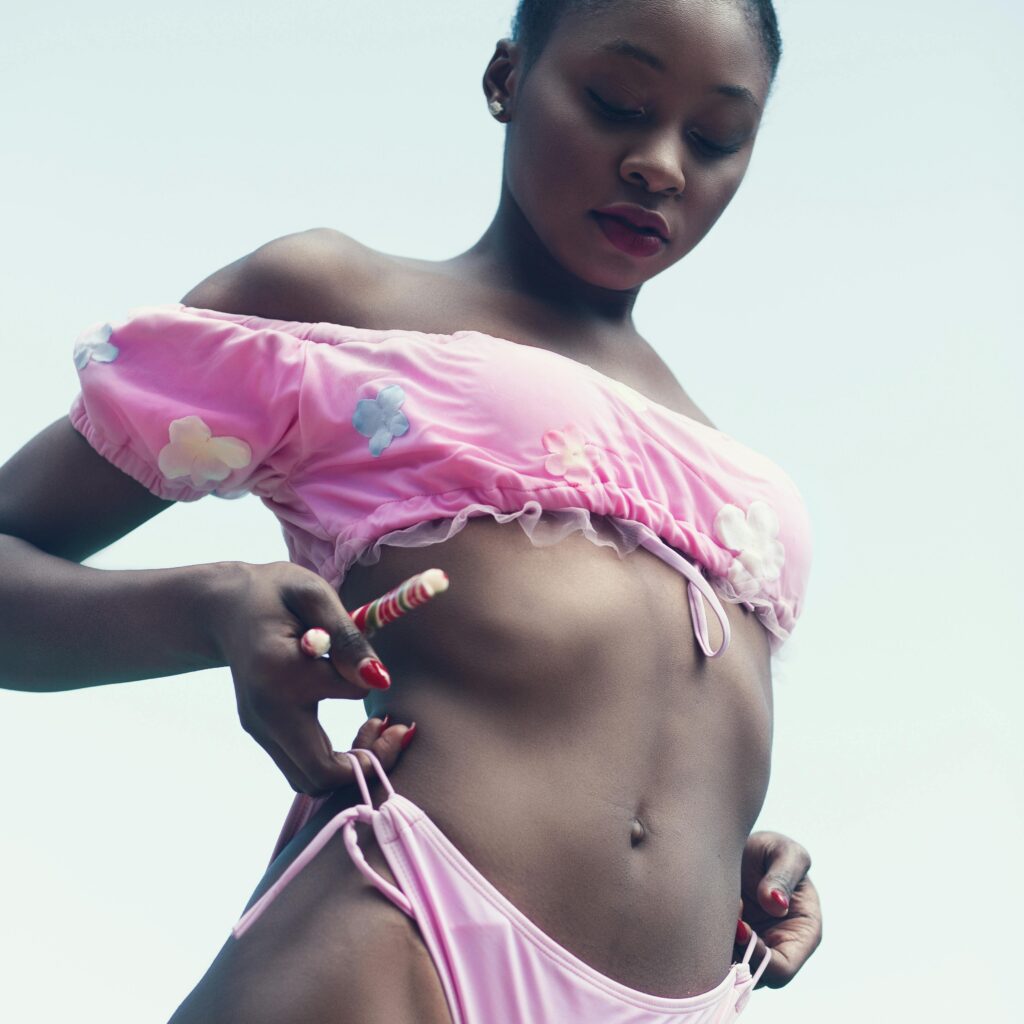
Structure 2: Leg Cross Variation
Crossing legs changes body lines instantly.
Options:
- Cross at the knees for cleaner lines.
- Cross at the ankles for a softer feel.
- Slightly extend one leg forward for elongation.
Seductive effect comes from:
- controlled posture
- deliberate placement
- calm upper body
Avoid fidgeting. Stillness reads as confidence.
Structure 3: Slight Recline
Leaning back while seated shifts tone again.
How it works:
- Hands placed behind you for support.
- Chest lifted naturally.
- Chin slightly elevated.
This pose communicates relaxation with awareness. It feels open but not exaggerated.
Keep tension balanced – too much arching can look forced.
Lying Down Poses – Visual Flow and Soft Power
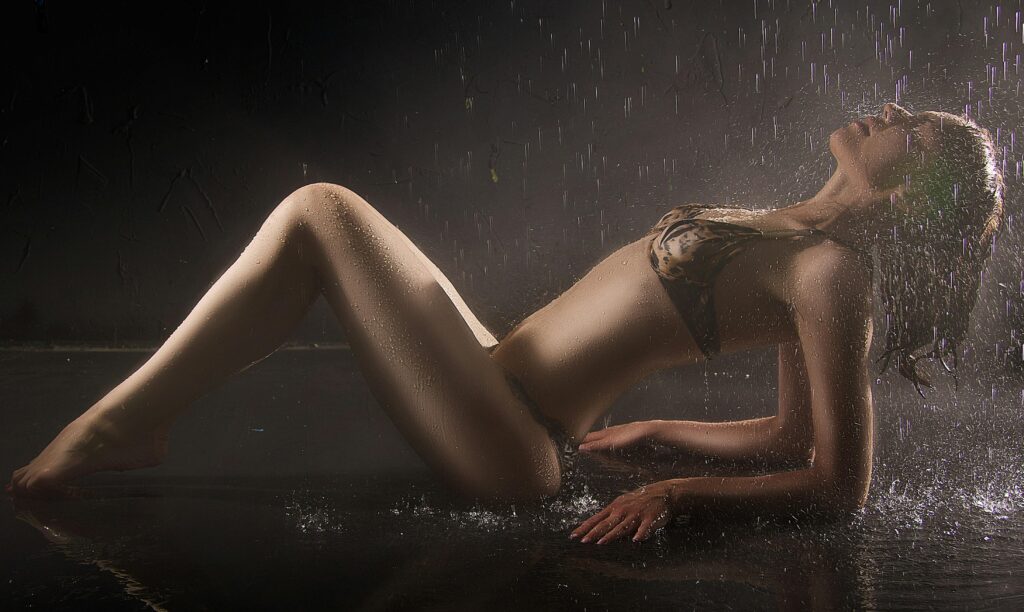
Lying poses remove vertical structure. They introduce curves, softness, and fluid lines.
They work well for:
- intimate feed content
- slower, more emotional tone
- late-night posting strategy
- storytelling shoots
Structure 1: Side-Lying Frame
Lie on your side.
How it works:
- Knees slightly bent.
- One arm supporting the head.
- Hips stacked.
- Core lightly engaged.
This pose creates natural curves without strain.
To increase intensity:
- Face the camera directly.
- Lower your chin slightly.
- Bring top shoulder forward.
To soften:
- Look away.
- Relax hands.
- Let hair fall naturally.
Structure 2: Stomach Down, Head Lifted
This pose builds subtle tension.
How it works:
- Lie on your stomach.
- Lift upper body slightly using forearms.
- Keep legs relaxed behind you.
The key is gentle lift – not pushing too high.
Direct eye contact here creates strong viewer connection without needing exaggerated movement.
Structure 3: On the Back With Angled Legs
Lying on your back offers clean symmetry.
How it works:
- Bend one knee.
- Keep the other leg extended or angled.
- Slightly engage core to avoid flat posture.
The asymmetry creates interest.
Avoid lying completely flat and passive. Slight engagement keeps the image intentional.
Why These Structures Matter
These are not “poses” you use once.
They are frameworks.
From one standing structure, you can capture:
- subtle version
- moderate version
- stronger seductive version
From one seated setup, you can produce 6-10 usable shots by adjusting:
- camera height
- eye contact
- shoulder angle
- leg positioning
This is how creators maximize a single shoot session.
Not by inventing something new every time —
but by understanding structure and making controlled adjustments.
Angles, Camera Placement, and Lighting – How to Support Seductive Posing Without Overcompensating
A strong pose can lose impact if the camera placement works against it.
Angles and lighting don’t replace posing.
They either support it – or weaken it.
Many creators try to “fix” a weak pose with dramatic lighting or extreme angles. That rarely works. The structure of the body comes first. Camera and light refine it.
Here’s how to use them correctly.
Camera Angles – Controlling Perception
The camera changes how your body lines are read.
Small height adjustments completely shift the tone of a photo.
Eye-Level: Balanced and Controlled
Shooting at eye level keeps proportions natural.
It works well when:
- you want presence without dominance
- the pose is already strong
- the focus is on direct engagement
Eye-level framing feels stable. It doesn’t distort. It lets the pose speak clearly.
Slightly Above: Soft Control
Raising the camera slightly above eye level:
- elongates the neck
- defines the jawline
- reduces lower-body emphasis
- creates subtle vulnerability
This angle works well for softer seductive poses.
It keeps things flattering without exaggeration.
Avoid raising it too high – extreme top-down shots can flatten curves and shorten the torso.
Slightly Below: Power and Presence
Lowering the camera slightly:
- enhances curves
- emphasizes posture
- increases dominance
This angle strengthens standing and seated poses.
But be careful.
Too low:
- distorts proportions
- widens hips unnaturally
- creates harsh shadows
The key word is slightly.
Small shifts create impact. Big shifts create distortion.
Distance – How Close Is Too Close?
Camera distance affects intensity.
Very close framing:
- feels intimate
- emphasizes engagement
- increases emotional proximity
But it also magnifies tension mistakes.
If your body position isn’t clean, close framing exposes it.
Medium framing:
- shows full structure
- preserves proportions
- feels deliberate
This is often the safest and most versatile distance for seductive posing.
Full-body framing:
- works best for standing structures
- shows curves and posture clearly
- communicates confidence
Mix distances within one shoot to avoid visual repetition.
Lighting – Defining Without Dramatic Overkill
Lighting shapes the body.
It creates depth, defines curves, and determines mood.
You don’t need dramatic colored lights to create seductive energy. In fact, overcomplicated lighting often distracts from the pose.
Natural Window Light
One of the most reliable setups.
Position yourself:
- near a window
- slightly angled toward the light
- not directly under it
Side lighting creates soft shadow definition. It highlights curves without harsh contrast.
This works especially well for subtle-to-moderate seductive tones.
Side Lighting for Definition
If you want slightly stronger definition:
Place your light source:
- to the side
- slightly above shoulder height
This creates shadow along:
- waist
- hip
- collarbone
- leg lines
It adds structure without making the photo look staged.
Avoid lighting from directly below – it creates unnatural shadows.
Overhead Light – Use Carefully
Direct overhead light:
- flattens the face
- removes curve definition
- creates eye shadows
If overhead light is unavoidable:
- step slightly forward
- angle your chin slightly down
- add a secondary light source if possible
Softness is more forgiving than harsh brightness.
The Common Overcompensation Trap
Creators sometimes try to make content look more “professional” by:
- extreme low angles
- overly dark contrast
- dramatic colored lights
- aggressive shadowing
This can feel theatrical instead of intimate.
Seductive posing works best when the viewer can clearly read body lines.
If lighting becomes the main focus, the pose loses power.
Supporting the Pose – Not Competing With It
Your pose should always be the anchor.
Before adjusting camera or light, ask:
- Does the body line look clean?
- Is posture controlled?
- Does the pose communicate what I want?
Then adjust angle and lighting to enhance – not correct – that structure.
Small refinements:
- slight chin shift
- subtle camera tilt
- minor repositioning toward light
These micro-adjustments often make a bigger difference than dramatic setup changes.
When angle and lighting support your pose correctly, seductive energy looks intentional – not forced.
And that’s where consistency begins.
Creating a Shoot Flow: Moving From Subtle to Seductive in One Session
Most creators don’t struggle with posing ideas.
They struggle with structure.
They shoot randomly.
They change outfits mid-session.
They escalate too fast.
They end up with content that feels disconnected.
A shoot flow solves that.
Instead of thinking in isolated poses, think in progression. One setup. Multiple intensity levels. Controlled escalation.
Here’s how to structure a session from subtle to seductive without overcompensating.
Step 1: Start at Low Intensity
Always begin with subtle posing.
Not because it’s safer – but because it warms up your body and camera awareness.
At the beginning of a shoot:
- breathing isn’t fully controlled yet
- posture needs adjustment
- tension feels unnatural
- expressions look slightly stiff
Subtle poses allow you to settle in.
Start with:
- angled body positions
- soft gaze
- relaxed shoulders
- indirect engagement
Capture 5-10 frames from small angle variations.
This gives you:
- teaser content
- profile previews
- safe feed material
- low-intensity promotion posts
And most importantly – it builds rhythm.
Step 2: Increase Engagement, Not Exposure
The next shift should be about engagement.
Not clothing removal.
Not dramatic arching.
Shift toward:
- stronger eye contact
- slightly forward body positioning
- more defined posture
- clearer hip or shoulder emphasis
You are increasing intention, not explicitness.
At this stage:
- poses feel more directed
- the viewer feels acknowledged
- tension becomes visible but controlled
Shoot multiple variations here.
Change:
- camera height
- distance
- gaze
- slight leg repositioning
This middle zone often produces the most usable content.
Step 3: Controlled Escalation
Now you move into stronger seductive territory.
Because your body is already warm and posture is stable, escalation looks natural – not forced.
Increase:
- body-facing direction
- curve emphasis
- lean toward camera
- proximity
Keep it structured.
Don’t jump from neutral posture into extreme posing.
Instead:
- increase hip shift slightly
- engage core more clearly
- lower chin subtly
- intensify gaze gradually
This produces a believable transition across images.
When fans see this progression in a post sequence, it feels immersive.
Step 4: Capture Your Highest Intensity Frames Last
The strongest poses should come at the end of the session.
Why?
Because by then:
- posture is controlled
- facial expressions are natural
- breathing is steady
- confidence is visible
This is when:
- premium tier content is captured
- PPV previews are shot
- high-conversion images are created
But even here, avoid overextension.
If you feel physical strain, it will show.
Strong does not mean exaggerated.
Why This Flow Increases Content Output
One location.
One outfit.
One lighting setup.
But structured progression creates:
- teaser content
- feed posts
- retention posts
- premium content
All from one session.
Instead of reinventing your aesthetic each time, you maximize depth within a single setup.
This is how creators stay consistent without burnout.
Avoiding the Common Flow Mistake
The most common mistake is escalation without structure.
Creators:
- jump straight into intense poses
- exhaust themselves early
- lose facial control
- struggle to return to softer tones
Then the session feels uneven.
Structured escalation prevents that.
Think of your shoot like pacing – not performance.
You build tension.
You increase intention.
You finish strong.
Micro-Adjustments That Instantly Improve Any Pose (Hands, Chin, Shoulders, Hips)
Most posing problems aren’t caused by bad ideas.
They’re caused by small details being ignored.
A pose can be almost perfect – and still feel awkward – because of one misplaced hand, a lifted chin, or collapsed shoulders. The good news is that these issues are easy to fix once you know what to watch for.
These micro-adjustments work across all pose types. Standing, seated, lying down. Subtle or seductive.
Hands – Where Most Poses Fall Apart
Hands are the most common weak point in photos.
When hands don’t know what they’re doing, the entire image feels unsure.
What to avoid
- clenched fists
- stiff, straight fingers
- hands pressed flat against the body
- fingers pointing directly at the camera
These create tension and distraction.
What works better
Hands should look occupied, even when they’re still.
Effective placements:
- resting lightly on thighs
- touching fabric or hair
- fingers grazing the waist or collarbone
- one hand supporting the body while seated or lying
Think of hands as connectors – they guide the viewer’s eye.
A useful rule:
If you don’t know where to put your hands, soften them and give them a light task.
Chin – The Smallest Movement With the Biggest Impact
Chin position changes how confident and engaged you look.
Most creators instinctively lift their chin – and that often works against them.
Common mistakes
- chin lifted too high
- head pulled back
- neck compressed
This flattens facial lines and creates distance.
Better adjustments
- slightly lower the chin
- gently extend the neck forward
- keep the jaw relaxed
This creates:
- cleaner facial lines
- stronger eye engagement
- a more intimate feel
It’s a small movement, but it changes the entire emotional tone of the photo.
Shoulders – Control vs Collapse
Shoulders define posture.
When shoulders collapse forward, the pose looks passive.
When shoulders are pulled back too hard, it looks forced.
The sweet spot
- shoulders down, not back
- chest naturally open
- no tension in the neck
Think “length”, not “lift”.
If you feel tension in your neck, you’re overcorrecting.
Hips – Subtle Shift, Big Difference
Hips create curves – but they don’t need exaggeration.
The biggest mistake is pushing hips out dramatically.
That often looks artificial.
What works
- shift weight onto one leg
- let the opposite hip relax
- keep the movement minimal
This creates natural asymmetry and flow.
In seated or lying poses:
- adjust knee angle slightly
- rotate hips just a few degrees
Even a small change here reshapes the entire body line.
How to Use Micro-Adjustments in Practice
Don’t try to fix everything at once.
When reviewing a pose, check in this order:
- Hands – do they look intentional?
- Chin – is the face engaged or distant?
- Shoulders – relaxed or tense?
- Hips – balanced or exaggerated?
One correction at a time.
Micro-adjustments are about refinement, not reinvention.
Why These Details Matter on OnlyFans
Fans don’t consciously analyze posture.
But they respond to ease.
When your body looks comfortable in a pose, the image feels confident. When small details are off, the viewer senses hesitation – even if they can’t explain why.
Micro-adjustments remove that friction.
They make posing look natural, even when it’s fully intentional.
Common Posing Mistakes That Kill Seductive Energy (and How to Fix Them)
Most posing mistakes don’t come from lack of effort.
They come from trying too hard – or not being aware of what the body is actually communicating.
Below are the most common issues that quietly kill seductive energy, even in otherwise well-shot content.
Mistake 1: Over-Posing
This happens when a pose looks performed instead of lived.
Signs of over-posing:
- extreme back arch
- exaggerated angles everywhere
- stiff facial expression trying to “sell” the pose
- too much tension in the entire body
The image starts to feel staged instead of intimate.
How to fix it: Scale back by 20-30%. Reduce:
- the arch
- the intensity
- the number of emphasized body parts
Choose one focal line and let everything else relax.
Seduction works better when it looks chosen – not forced.
Mistake 2: No Clear Intention
A pose without intention feels random.
This often happens when creators move too quickly between positions without resetting awareness.
The result:
- awkward transitions
- half-finished posture
- unclear energy
The viewer doesn’t know how to read the image.
How to fix it: Before taking the photo, ask one simple question:
What am I communicating right now?
Confidence?
Invitation?
Distance?
Control?
Hold that intention for the full pose. Don’t rush the frame.
Mistake 3: Repeating the Same Body Language
Even strong poses lose impact when repeated too often.
Common repetition patterns:
- same hip shift every time
- same head tilt
- same gaze direction
- same hand placement
Over time, fans stop noticing the pose – even if they like the creator.
How to fix it: Rotate one element per shoot:
- change gaze direction
- swap which hip carries weight
- switch camera height
- reverse body angle
Small changes keep the content visually fresh without changing your style.
Mistake 4: Ignoring Transitions
Many photos fail not because of the pose – but because of how the creator arrived in it.
If you move abruptly into a pose:
- posture looks stiff
- muscles look tense
- expression feels disconnected
The image captures the adjustment, not the intention.
How to fix it: Slow down.
Enter the pose gradually.
Hold it for a second.
Then take the shot.
That pause allows your body to settle into the position naturally.
Mistake 5: Overusing Facial Expression
Trying to “carry” seduction with the face alone often backfires.
Overuse looks like:
- exaggerated pout
- forced open mouth
- constant lip biting
- dramatic expressions that don’t match the body
It becomes repetitive fast.
How to fix it: Let the body lead.
Use facial expression as support – not the main event.
Neutral or soft expressions paired with strong body positioning often feel more seductive than dramatic faces.
Mistake 6: Collapsed Posture
This is subtle but extremely common.
Collapsed posture includes:
- rounded shoulders
- sunken chest
- neck pulled back
- uneven weight distribution
Even explicit content loses impact when posture collapses.
How to fix it: Think length, not lift.
- shoulders down
- spine extended
- chest naturally open
You should feel balanced, not tense.
Mistake 7: Posing Past Your Comfort Zone
When a pose pushes beyond your physical or emotional comfort, it shows.
Fans may not know why it feels off – but they feel it.
Signs:
- visible strain
- forced confidence
- rushed shooting
- loss of control mid-pose
How to fix it: Work within ranges that feel sustainable.
Seductive energy comes from ease.
If a pose requires constant adjustment or causes discomfort, it’s not serving you – no matter how popular it looks online.
Why Fixing These Mistakes Changes Everything
Removing these errors doesn’t just improve photos.
It:
- increases consistency
- reduces burnout
- makes shoots faster
- improves fan perception
When posing feels controlled and intentional, fans trust the content more.
And trust leads to longer subscriptions and higher engagement.
How to Build a Personal Posing Style Fans Recognize Over Time
Good posing gets attention.
A recognizable posing style builds loyalty.
On OnlyFans, fans don’t just follow bodies – they follow patterns. Over time, they learn how a creator feels on camera. That feeling is what keeps them subscribed, even when content intensity fluctuates.
A personal posing style isn’t about doing something extreme or unique. It’s about consistency in choices.
What a “Posing Style” Actually Is
A posing style isn’t one pose you repeat forever.
It’s a combination of habits:
- how you usually position your body
- how directly you engage the camera
- how much tension you use
- how fast or slow your poses feel
- where your energy usually sits (soft, confident, dominant, distant, playful)
Fans may not consciously identify these patterns – but they recognize them.
That recognition creates familiarity. Familiarity builds comfort. Comfort drives retention.
Step 1: Identify Your Natural Baseline
Every creator has a baseline, whether they realize it or not.
Some naturally lean toward:
- softer, slower movements
- indirect eye contact
- relaxed posture
Others naturally project:
- direct engagement
- grounded stance
- controlled tension
Instead of forcing yourself into trends, observe what already feels natural.
Review your best-performing content and look for patterns:
- Are you usually angled or facing forward?
- Do your strongest posts use eye contact or not?
- Is your energy calm or intense?
That baseline is the foundation of your style.
Step 2: Choose Your “Range”, Not a Persona
A common mistake is trying to lock into a single vibe.
That creates burnout and visual stagnation.
Instead, define a range:
- a low-intensity version (subtle)
- a mid-intensity version
- a high-intensity version
All within the same emotional tone.
For example:
- calm → confident → assertive
- soft → intimate → seductive
- distant → engaged → direct
This allows you to escalate or pull back without breaking character.
Fans recognize the throughline, even as intensity changes.
Step 3: Repeat Structures, Not Exact Poses
Recognition comes from structure, not repetition.
Reusing:
- the same hip shift
- similar seated posture
- consistent camera distance
- familiar gaze patterns
creates continuity without boredom.
Avoid repeating:
- the exact same pose
- identical framing
- identical expression
Think “familiar shape, new moment”.
This makes your content feel cohesive instead of recycled.
Step 4: Let Your Strengths Lead
Every body has strengths.
Some creators shine in:
- standing poses
- close framing
- slow transitions
- stillness
Others do better with:
- movement
- seated or lying positions
- expressive hands
- stronger eye contact
Build your style around what consistently looks strongest on you, not what performs for someone else.
This reduces effort and increases confidence – and confidence reads immediately on camera.
Step 5: Stay Consistent Even When Experimenting
Experimentation is important, but random shifts confuse your audience.
If you try something new:
- introduce it gradually
- blend it with familiar elements
- don’t change everything at once
For example:
- keep your usual camera distance while changing posture
- keep your usual tone while testing a new angle
That way, experimentation feels like evolution – not a reset.
Why Recognizable Style Increases Retention
When fans recognize your posing style, they know what to expect emotionally.
That doesn’t make content boring.
It makes it reliable.
Reliability is what turns casual subscribers into long-term ones.
They stay not because every post is shocking – but because the experience feels consistent, intentional, and familiar.
Final Thoughts: Posing as a Long-Term Skill, Not a One-Time Trick
Posing on OnlyFans isn’t about memorizing a list of “hot poses”.
It’s a skill that develops over time – through awareness, repetition, and small refinements.
Creators who treat posing as a one-time fix often chase trends, copy poses that don’t fit their body, and burn out trying to constantly escalate. The result is inconsistency and fatigue.
Creators who treat posing as a long-term skill work differently.
They:
- understand how their body reads on camera
- know how to shift intensity without changing identity
- reuse structures instead of reinventing everything
- make small adjustments instead of dramatic changes
That approach is sustainable.
Subtle posing builds anticipation.
Seductive posing deepens engagement.
Knowing when – and how – to move between them creates control.
And control is what makes content feel intentional rather than accidental.
You don’t need more ideas.
You don’t need more extreme poses.
You need clarity.
Once you understand what your body communicates, posing stops being stressful. Shoots become faster. Content becomes more consistent. And fans start responding not just to what they see – but to how it feels.
That’s the difference between posing as a trick and posing as a skill.
And that difference compounds over time.